
The 'labour pathways' revolution: Italy redefines talent with two pioneering companies

Behind every hire is a decision to look further. For a growing number of forward-thinking employers, the answer is no longer confined to the local labour market. A group of Italian companies have become pioneers in hiring displaced professionals based on potential, supporting refugees and displaced people to access training in their country of origin, and welcoming them as permanent members of their teams.
Two of those companies, Reale Group and Valuetech, bring very different things to the table. One is a 200-year-old insurance company with 7,000 employees and operations across Europe and one of the most established companies in the Piamonte region. The other is an agile, internationally-minded IT consultancy born as a spin-off of a company grown in the incubator of the Polytechnic of Turin, with offices in Cosenza and Turin. Yet both share something that matters far more than size or sector: a genuine conviction that inclusive hiring is not just good ethics, it is good business.
Ready for IT: Recognizing skills, building futures
Both companies hired through ReadyForIT, a programme that trains displaced professionals in Kampala, Uganda, in IT skills before matching them with employers in Italy. The candidates arrived with real qualifications and professional experience. Ready for IT delivered in partnership with Accenture Foundation, UNHCR and Diaconia Valdese, among others, provided something equally important, an entry point to an existing talent pool. In a context where Italian employers often struggle to recognize qualifications from other countries, particularly those issued in Africa, the involvement of organizations like UNHCR and TBB served as a powerful endorsement of the candidates' skills and readiness.
TBB played a central role throughout, pre-selecting candidates, preparing their profiles, and providing essential pre-departure information to both candidates and partners. This support was critical in helping candidates understand the realities of working life in Europe, including the fact that integration, while achievable, takes time and effort.
Reale Group: Lived experience at the heart of inclusion
At Reale Group, the journey into refugee talent mobility was shaped by someone who understood it from the inside. Ahmed Mussa, who works for the Reale Foundation and is himself a former refugee, became a champion for the ReadyorIT programme, drawing on his own experience to challenge common stereotypes about displaced people within Italian and European corporate cultures.
The foundation, which distributes millions of euros annually to projects focused on health, environment, and social inclusion, including to other refugee-serving organizations, is also a key donor to the partnership on Labour Pathways for Refugees* in Italy and a strong supporter of our collective mission. Participating in Ready for IT was a natural progression, one that offered something more structured: a pipeline of trained, vetted professionals ready to contribute.
Dawood, the candidate Reale hired through the programme received four job offers from Italian employers, a testament to the quality of candidates coming through the programme. Dawood joined the Reale team and, by all accounts, has integrated well. His colleagues are happy with his work, and the company plans to offer him a permanent contract when he completes his first year in July.
Ahmed reflects on the experience: "When I look at Dawood, I see someone who was always capable. What he needed was the opportunity and the right environment to show it. That is exactly what this programme gave him, and that is exactly what Reale gave him too."
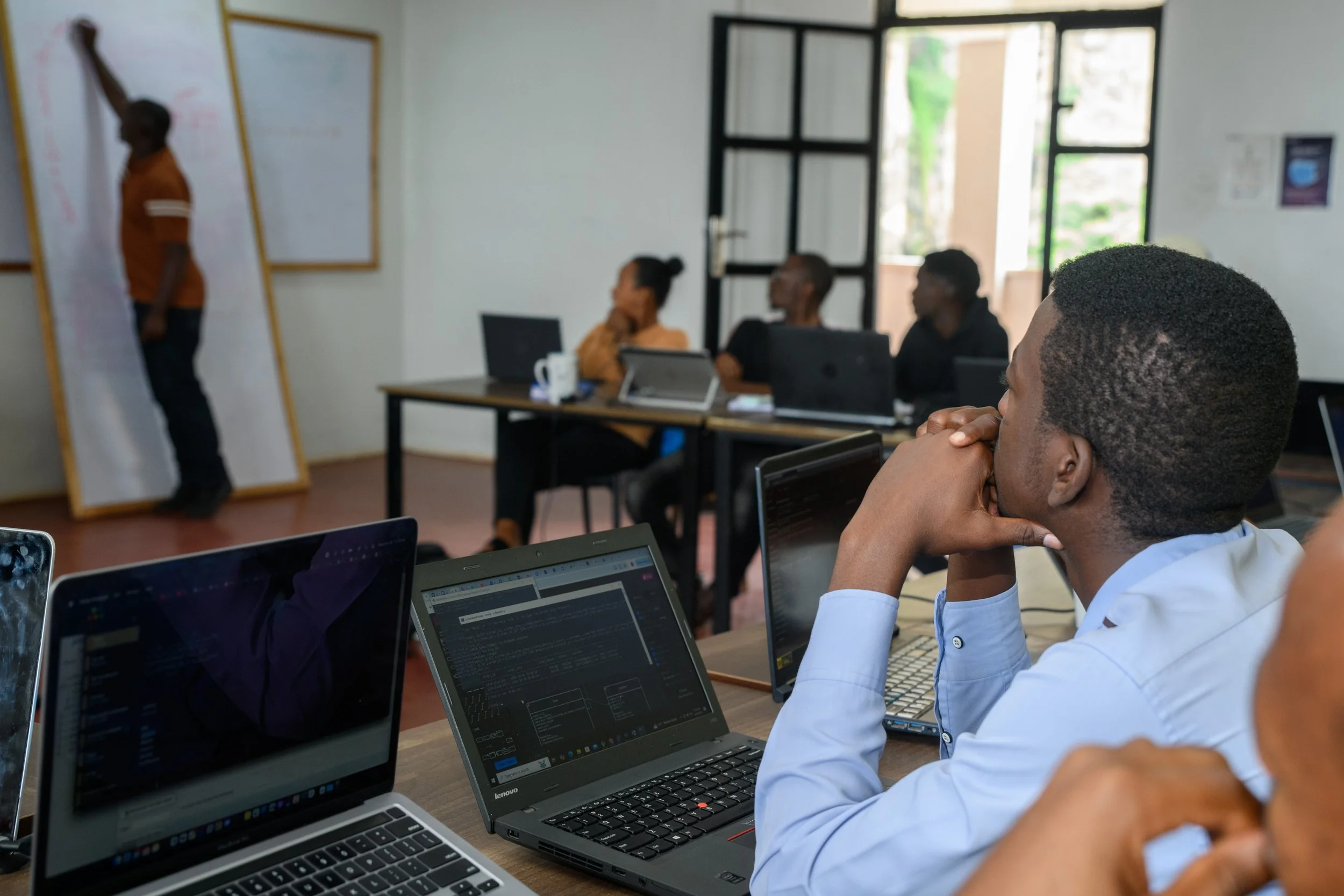
Dawood while training in Kampala, Uganda. Photo credit: UNCHR Italy
Valuetech: Where ethics and expertise meet
For Valuetech, participation in ReadyForIT was consistent with a company culture built with a focus on international hiring and ethical inclusion from its earliest days. Having previously engaged with programmes like Erasmus+ and collaborated with Informatics Without Borders, the company was already predisposed to looking beyond conventional recruitment channels when UNHCR brought the ReadyForIT opportunity to their attention.
From the CVs shared by Talent Beyond Boundaries, Valuetech interviewed a number of candidates before selecting Robin, who stood out for his English proficiency, technical background, and the quality of his interview. Robin arrived in September 2025 and has been integrating steadily since.
Francesco Argentino, Director and Head of Operations, describes the experience positively overall, with one clear area for development: “Robin's mindset from the very first interview told us everything we needed to know. He came in curious, motivated, and ready to learn. That attitude does not come from a CV, and it is exactly what a company like ours needs.”Being a pioneer in displaced talent mobility means learning as you go, and Valuetech has approached that with the same openness that defined their decision to participate in the first place. Robin has continued to develop his Italian, and the team's confidence in him has only grown. Francesco is clear that Valuetech would participate again, and that the experience has reinforced the company's belief that the right candidate, given the right support, will always find their footing.
Lessons from the process
Neither Reale nor Valuetech arrived at a frictionless experience, and both are candid about that. For Dawood, a clerical error by authorities caused a delay of three to four months before he could arrive in Italy. It is a small but telling illustration of how systems that were not designed with labour mobility in mind can slow down even the most willing participants. Ministries were not yet coordinating effectively, and protocols for this type of visa pathway were not yet established.
Both companies are clear, however, that these are early-stage challenges with early-stage solutions. The programme is opening doors, and each employer who participates helps demonstrate to policy-makers, immigration authorities, and other businesses that the model works.
An invitation to other employers
The train-to-hire model asks employers for patience with process, openness to candidates from unfamiliar backgrounds, and a willingness to invest in integration as well as recruitment. What it gives back is a cohort of professionals who are committed, motivated, and in the experience of both Reale and Valuetech, genuinely valued members of their teams.
Dawood and Robin are two individuals whose careers were interrupted, not ended. Two companies that chose to look further, and found exactly what they were looking for.
For employers considering this pathway, these two stories are an invitation. The professionals are ready, structured partnerships are in place to support implementation including through the Skills, Talent and Empowerment through Pathways (STEP) programme, co-funded by the European Union's AMIF and led by FCEI, with partners including Talent Beyond Boundaries, the partnerships are in place, with TBB, Accenture Foundation, UNHCR, Diaconia Valdese, Pathways International, and the wider STEP consortium.The evidence, from retention to workplace integration to community contribution, speaks for itself.
If you are an Italian employer interested in learning more about our programme, contact us here.
About Talent Beyond Boundaries
Talent Beyond Boundaries is building a world where displaced people can safely migrate for work and fully realize their skills to rebuild their lives with dignity and purpose. Founded in 2016, TBB was the first organization in the world to focus on refugee labour mobility as a complementary pathway to traditional humanitarian resettlement. TBB's Talent Catalog, a world-first database, connects skilled displaced professionals with employers in Australia, Belgium, Canada, Germany, Ireland, Italy, the Netherlands, the UK and the US who need their skills.
The labour pathways in Italy are possible thanks to the collaboration of UNHCR, Diaconia Valdese, Pathways International and TBB, and are supported by ACRI – Associazione di Fondazioni e di Casse di Risparmio Spa, Fondazione Compagnia di San Paolo and The Human Safety Net, Fondazione Italiana Accenture, Reale Foundation, Fondazione Shapiro, Flora Fund and Fondo Beneficenza Intesa San Paolo, a testament to the growing commitment of the philanthropic and private sector to high-impact social initiatives.
